Trump says Iran war "close to over" amid hopes for more negotiations

Introduction & Market Context
XTI Aerospace Inc. (NASDAQ:XTIA) presented its fourth quarter and full year 2025 results on April 15, 2026, outlining a strategic transformation from aerospace development to a vertically integrated drone platform spanning distribution, manufacturing, and defense. The company’s stock surged 14.08% to $2.35 in aftermarket trading, with an additional 6.31% gain to $2.19 in extended trading, reflecting investor enthusiasm for the company’s pivot toward autonomous defense systems and NDAA-compliant manufacturing.
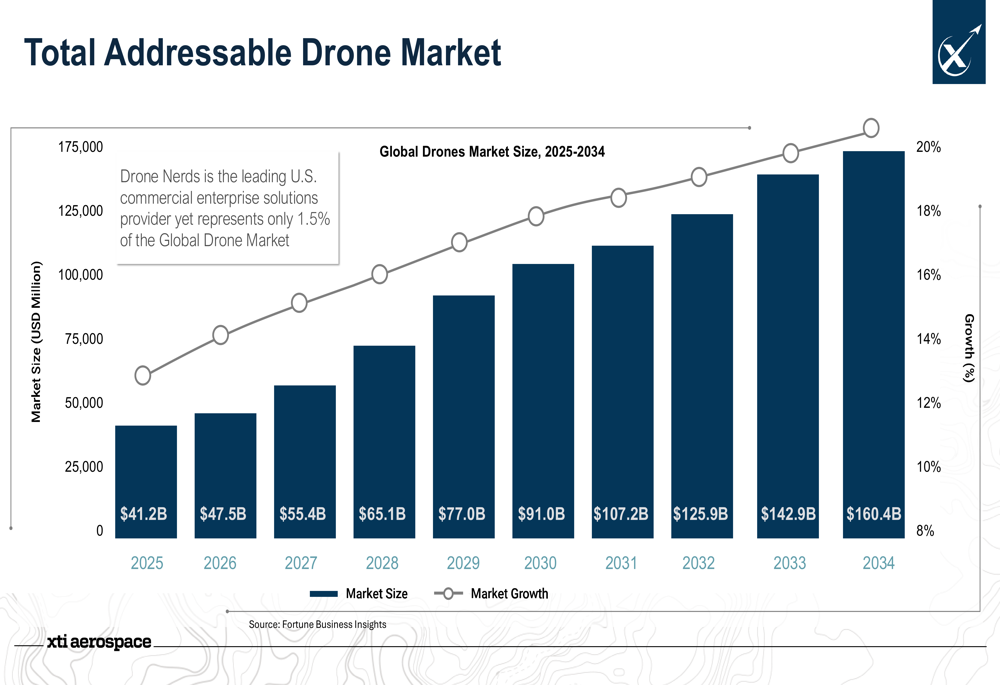
The presentation detailed how XTI is positioning itself to capture a growing slice of the global drone market, which the company projects will expand from $41.2 billion in 2025 to $160.4 billion by 2034, representing a 20% compound annual growth rate.
Financial Performance Highlights
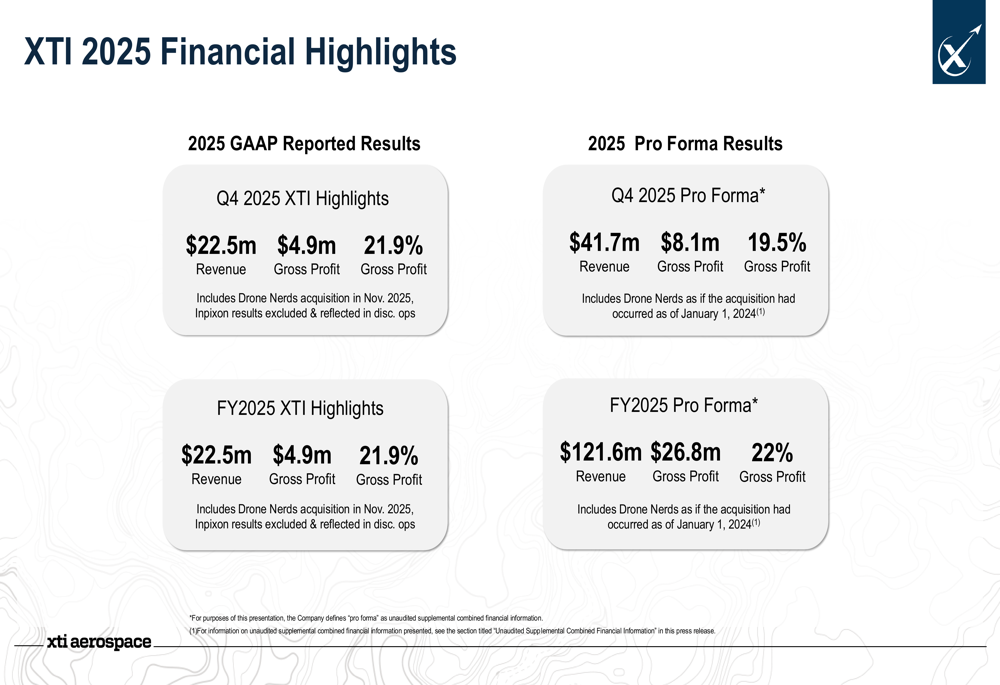
XTI Aerospace reported fourth quarter 2025 GAAP revenue of $22.5 million with a gross profit margin of 21.9%. On a pro forma basis including the full quarter of Drone Nerds operations, Q4 revenue reached $41.7 million with a 19.5% gross margin.
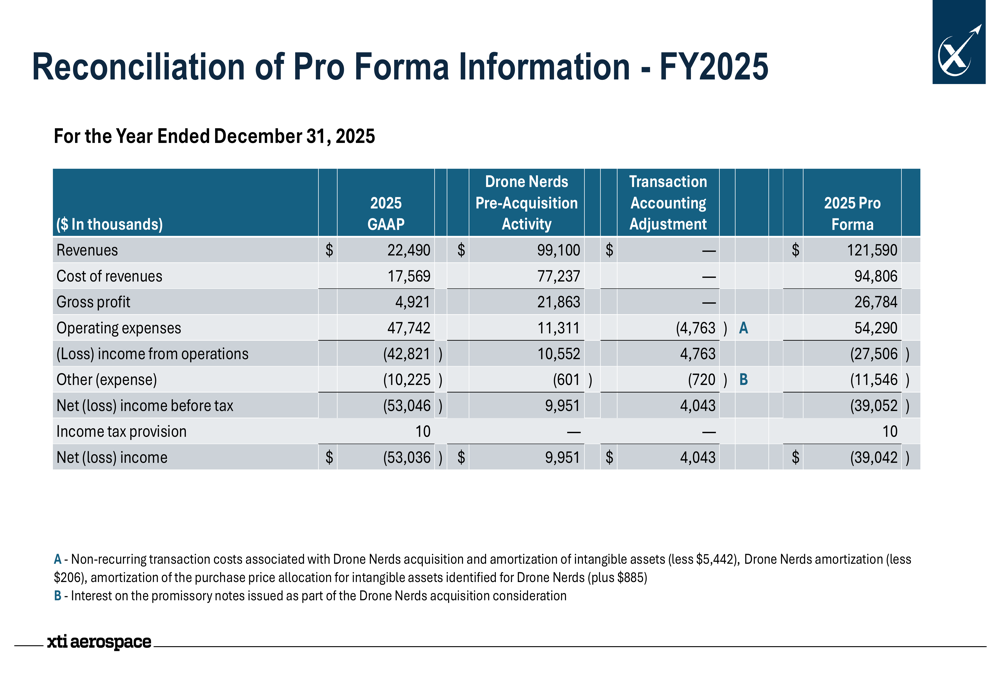
For the full year 2025, pro forma revenue totaled $121.6 million with gross profit of $26.8 million, translating to a 22% gross margin. The company achieved positive cash flow and strong EBITDA from its distribution platform, marking a significant milestone in its operational development.
The following chart illustrates the company’s Q4 2025 financial performance on both a GAAP and pro forma basis:
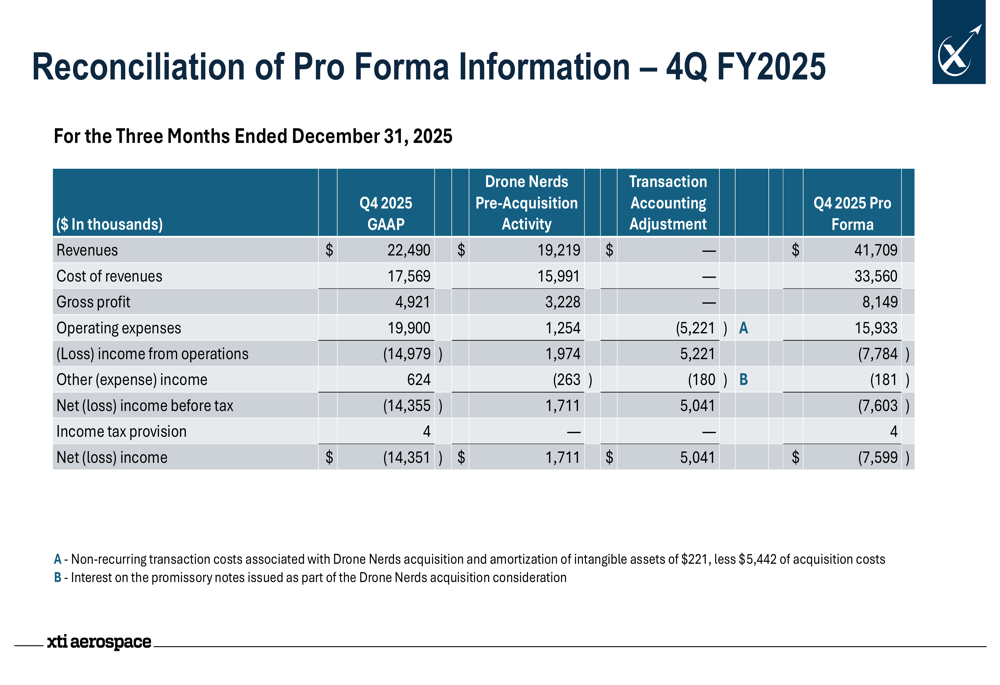
A detailed reconciliation of the pro forma adjustments shows how the Drone Nerds acquisition contributed to the company’s overall performance:
The full year reconciliation demonstrates the integrated financial impact of XTI’s strategic acquisitions:
Strategic Framework: Access, Control, Dominance
XTI’s presentation centered on a three-pillar strategy designed to create what management describes as a "flywheel effect" of compounding growth, margins, and competitive moat.
The company’s vertically integrated approach combines distribution reach, manufacturing control, and defense credibility into a cohesive platform:
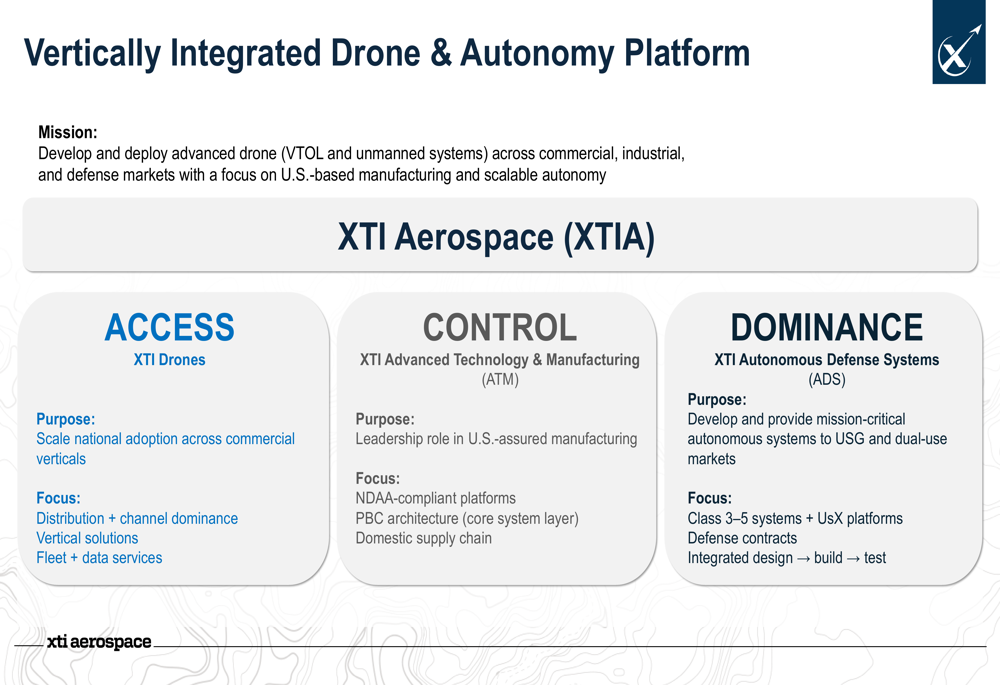
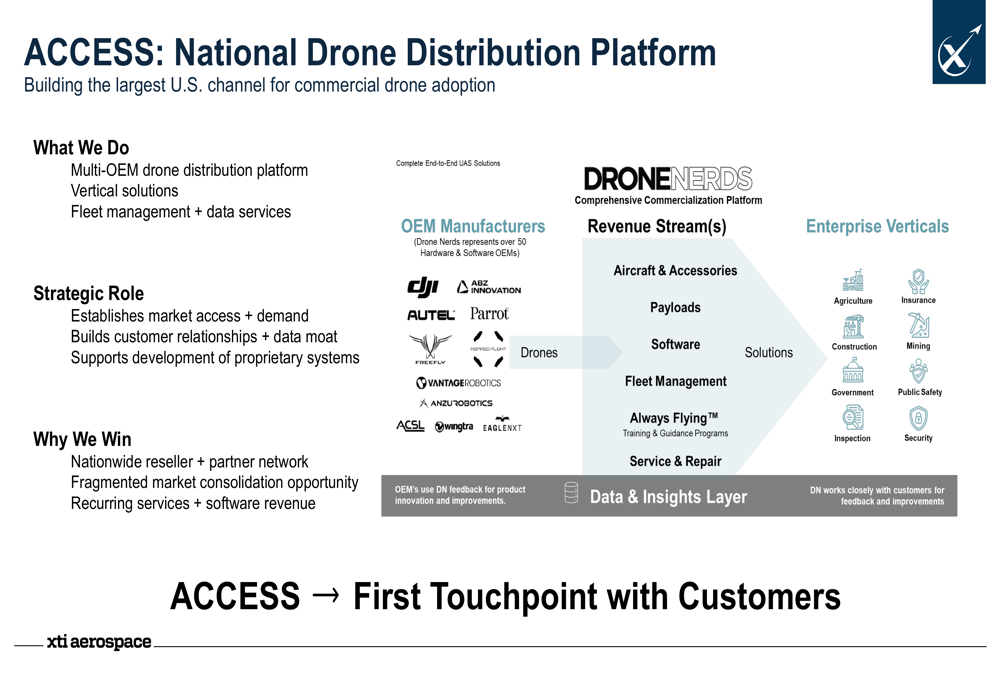
The ACCESS pillar focuses on building the largest U.S. channel for commercial drone adoption through Drone Nerds, which now represents over 50 hardware and software OEMs. The platform serves multiple enterprise verticals including utilities, construction, public safety, and infrastructure inspection.
As illustrated in the company’s distribution platform overview, Drone Nerds generates revenue through aircraft and accessories, payloads, software solutions, and fleet management services:
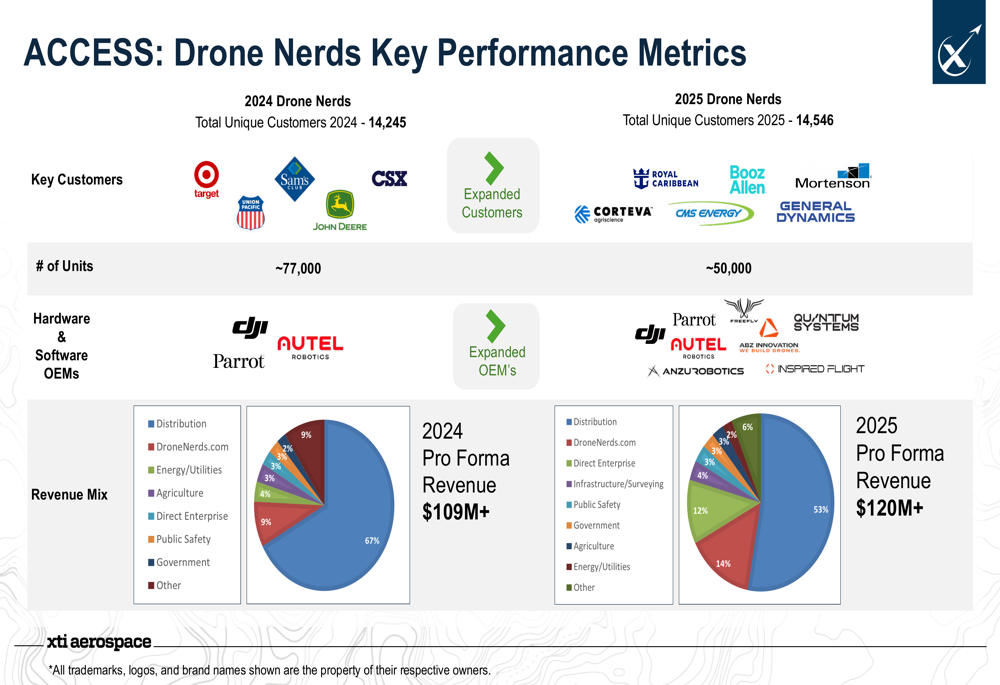
Drone Nerds demonstrated solid growth metrics, expanding its customer base to 14,546 unique customers in 2025 from 14,245 in 2024. Key customers include Royal Caribbean, Booz Allen, Mortenson, and CMS Energy. Pro forma revenue increased from $109 million in 2024 to $120 million in 2025, though the revenue mix shifted with distribution declining from 67% to 53% of total revenue as solutions and services grew.
Manufacturing and Defense Expansion
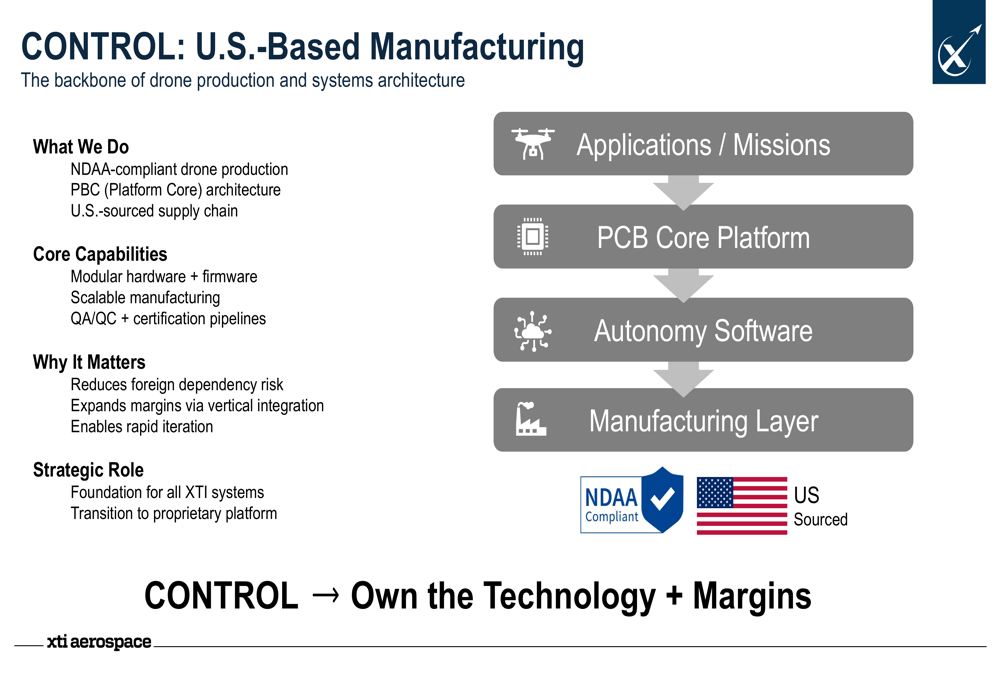
The CONTROL pillar emphasizes U.S.-based, NDAA-compliant drone production to address supply chain vulnerabilities and capitalize on regulatory shifts away from foreign-manufactured drones. XTI is developing a Platform Core (PBC) architecture with modular hardware and firmware, enabling scalable manufacturing and rapid iteration.
The company’s manufacturing strategy focuses on reducing foreign dependency risk while expanding margins through vertical integration:
To lead this initiative, XTI brought on Dr. Alex Williams, former EVP of Strategy at Agilion Systems and CTO at Venatrust, with prior experience at Apple and Pratt & Whitney. His expertise in advanced manufacturing and commercialization is central to XTI’s domestic production ambitions.
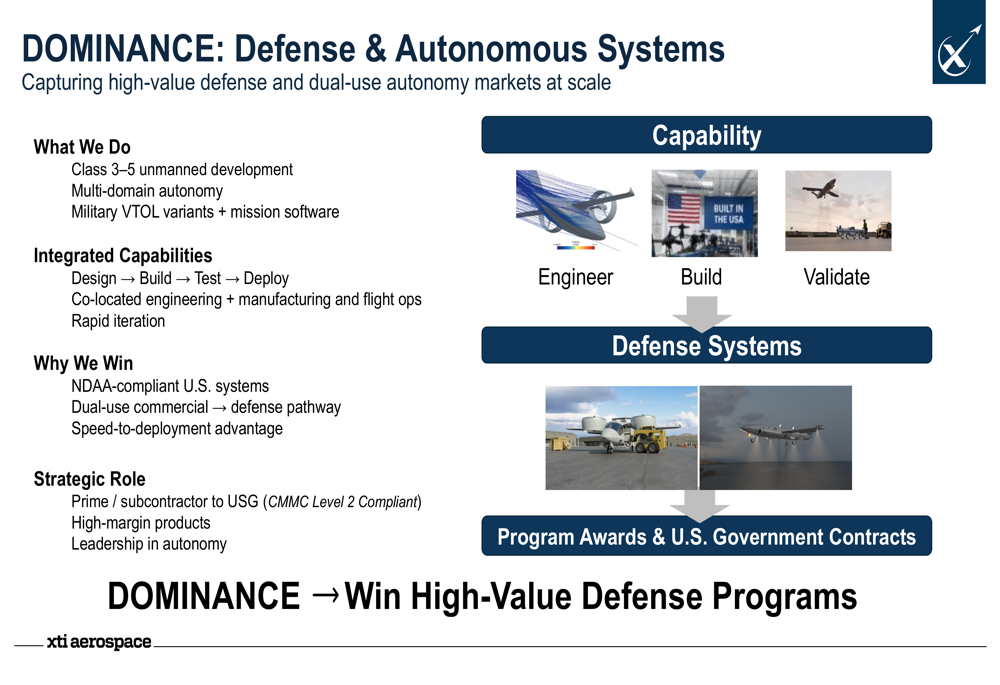
The DOMINANCE pillar targets high-value defense and dual-use autonomy markets through Class 3-5 unmanned system development and multi-domain autonomy. The company is pursuing both prime contractor and subcontractor roles with the U.S. government and has achieved CMMC Level 2 compliance.
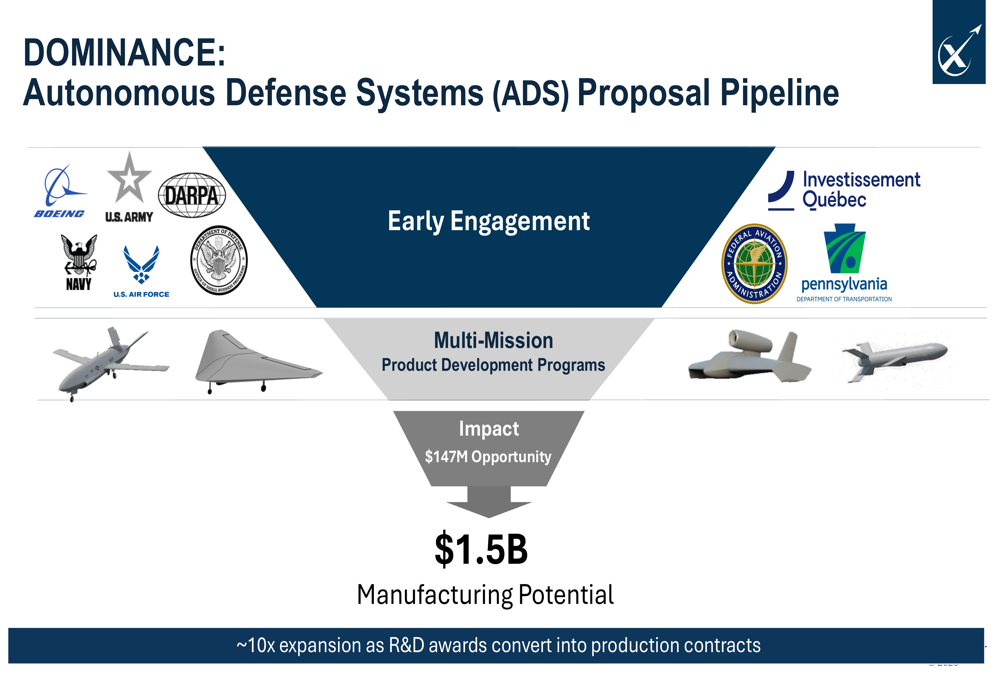
XTI outlined five major defense programs in various stages of development, representing a combined $147 million in R&D contract value with potential manufacturing opportunities totaling $1.5 billion:
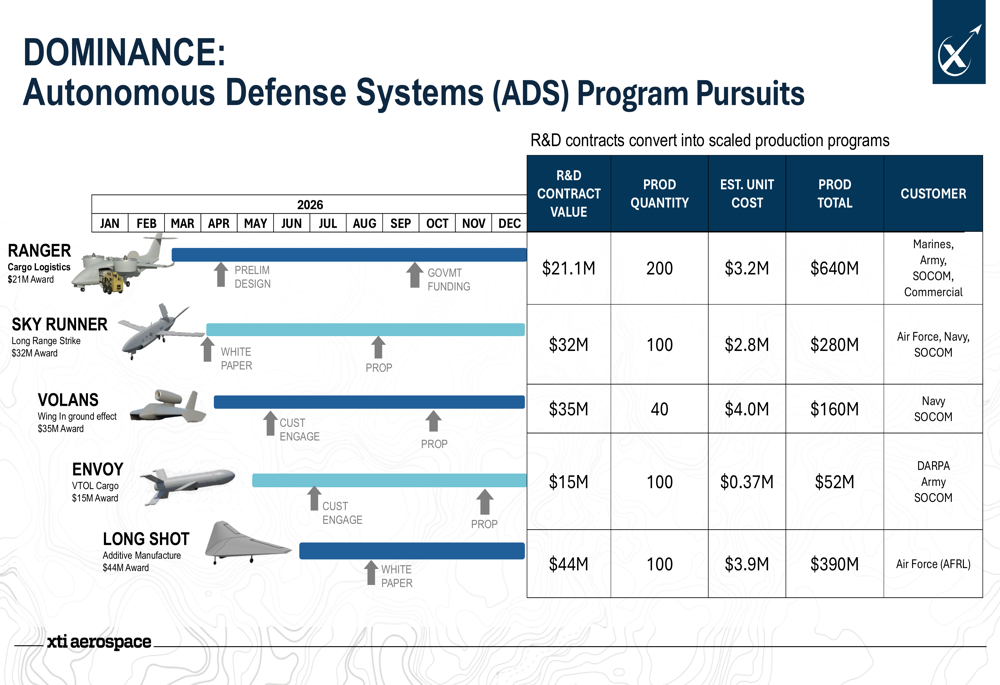
The programs span cargo logistics (RANGER at $21.1M), long-range strike (SKY RUNNER at $32M), wing-in-ground-effect systems (VOLANS at $35M), VTOL cargo (ENVOY at $15M), and additive manufacturing (LONG SHOT at $44M). Customer agencies include the Marines, Army, SOCOM, Air Force, Navy, and DARPA.
XTI’s defense proposal pipeline shows early engagement with major defense primes and government agencies:
To execute this defense strategy, XTI appointed Steve Zohrabian to lead its Autonomous Defense Systems division. Zohrabian brings 14+ years of Boeing experience and previously served as Chief Operating Officer at Piasecki Aircraft Corporation.
Market Opportunity and Competitive Position
XTI positioned itself as addressing a fragmented market with significant growth potential. Despite Drone Nerds being characterized as the leading U.S. commercial enterprise solutions provider, the company represents only 1.5% of the global drone market, highlighting substantial expansion opportunity.
The total addressable market projection shows dramatic growth over the next decade:
The company identified multiple expansion vectors including aftermarket services, financial services, operational services, engineering solutions, and advanced manufacturing. Vertical expansion opportunities span agriculture, public safety, military/defense, government, utilities, construction, and logistics.
Forward Guidance and Strategic Priorities
For fiscal year 2026, XTI projects revenue exceeding $160 million, representing 30%+ growth from 2025 levels. The company targets revenue per employee above $1.2 million, indicating a focus on operational efficiency alongside top-line growth.
Management emphasized three key priorities: strengthening the commercial business through Drone Nerds, addressing critical U.S. supply chain gaps through NDAA-compliant manufacturing, and leveraging defense contracts for autonomous unmanned systems development.
CEO Scott Pomeroy noted the company’s strategic pivot away from the TriFan VTOL program to focus capital on "higher-priority initiatives with shorter deployment timelines," specifically the distribution platform expansion and government/manufacturing sector growth.
The presentation concluded with management’s assertion that "The Flywheel is Turning," suggesting the three strategic pillars are beginning to create mutually reinforcing value as distribution drives data and adoption, manufacturing improves margins and product velocity, and defense systems enhance credibility and demand.
Market Reaction and Valuation Context
With a market capitalization of approximately $80.58 million, XTI has delivered an 89.52% year-to-date return and 55.63% gain over the past six months. The stock exhibits a negative beta of -0.74, indicating it often moves inversely to broader market trends.
The company’s capitalization table shows 38.5 million common shares outstanding, with total fully diluted shares reaching approximately 99.8 million including warrants and employee stock incentive plans.
Investors appear to be responding positively to XTI’s strategic repositioning toward near-term revenue opportunities in distribution and government contracting, while maintaining optionality in advanced autonomous systems development through its defense programs pipeline.
Full presentation:
This article was generated with the support of AI and reviewed by an editor. For more information see our T&C.